

Writing your own vows works best when the vows sound like a promise, not a performance. For a symbolic ceremony, the strongest vows are personal, concise, and shaped around the setting, the people present, and the life you are choosing together.
That matters even more in a castle or historic estate. The room already carries atmosphere. Your words do not need to compete with it. They need to belong there.
Summary in Brief
- Personal vows should be short enough to be heard fully. Aim for two to three minutes per person, unless your ceremony has been designed for a longer spoken moment.
- A symbolic ceremony gives you more freedom than a legal script. Use that freedom to make the vows more precise, not more elaborate.
- The best vow structure is simple: memory, meaning, promise, future.
- Private details should serve the guests in the room. Keep the feeling intimate, but make the story understandable.
- Delivery matters as much as writing. Read slowly, leave space, and let the moment breathe.
What makes vows different in a symbolic ceremony?
A symbolic ceremony is not limited to the fixed wording of a civil or religious service. The ceremony can be written around your relationship, your families, your values, and the place where you are gathering.
That freedom is the gift. It is also the trap. Without structure, vows can become a speech, a diary entry, or a collection of beautiful lines that do not quite say what is being promised. In a symbolic ceremony, vows should still do the work of vows: they should name what you choose, what you honor, and what you intend to protect.
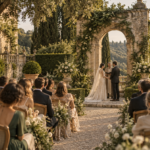
For Castle Weddings, symbolic ceremonies are strongest when they feel deeply personal without becoming overly theatrical. The aim is not to make every guest cry. The aim is to let everyone understand, quietly and clearly, why this commitment belongs to this couple and this place.
How long should personal wedding vows be?
Personal wedding vows are usually strongest at two to three minutes per person. Vogue’s guidance from professional vow writers notes that vows often work within a two-to-five-minute range, but shorter vows are easier for guests to receive and easier for the couple to deliver with presence.
For an intimate destination wedding, think of length as part of hosting. Guests may be seated in a chapel, courtyard, library, garden, or candlelit hall. They are listening closely. A concise vow gives them something they can hold onto.
Start with the ceremony, not the blank page
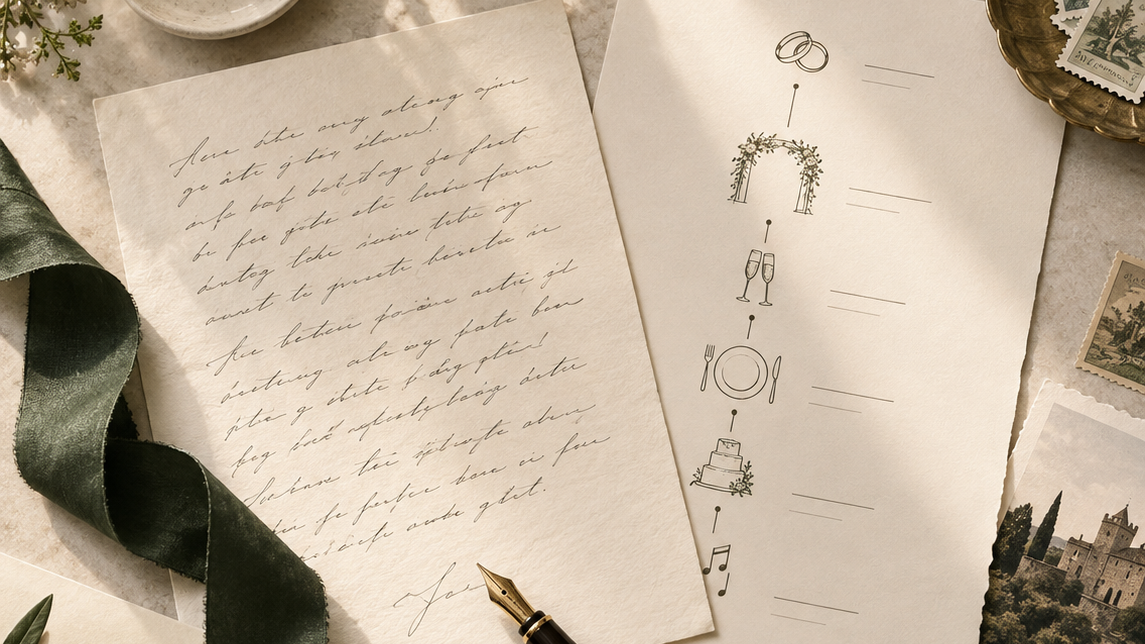
Before writing your own vows, decide what role the vows will play in the ceremony. Are they the emotional center? A quiet exchange before a longer reading? A private-feeling moment witnessed by your closest people?
This is where symbolic ceremonies become especially useful. The ceremony can be shaped so the vows sit naturally inside the whole rhythm: welcome, story, reading, ritual, vows, exchange of rings, closing words. If the vows carry the full emotional weight, they may need more context. If the celebrant has already told part of your story, the vows can become more direct.
Ask three questions before you write a single line:
- What should our guests understand about us by the end of this moment?
- What do I want my partner to remember ten years from now?
- What promises feel true in ordinary life, not only on a beautiful day?
Use a simple vow structure: memory, meaning, promise, future
The clearest vow structure has four parts: one memory, what it reveals, the promises you are making, and the future you are choosing. This structure keeps the writing personal without losing shape.
Start with one specific moment. Choose something small enough to feel real: the first dinner where conversation became easy, the morning you knew this was home, the difficult season you handled together, the habit that still makes you feel loved.
Then explain what the memory means. Do not simply describe the scene. Tell your partner what it taught you about them, or about the kind of life you want to build.
After that, make the promises. The promises are the spine of the vows. They should be durable enough to still matter when the wedding weekend is over: how you will listen, repair, celebrate, protect, choose, and return to one another.
Close with the future. Not a perfect future. A lived one. A future with rooms, journeys, families, changing seasons, and the daily practice of staying close.
What should you include in your vows?
Your vows should include a direct address to your partner, one or two details from your relationship, three to six promises, and a closing line that feels like a commitment rather than a flourish.
Professional vow writers often recommend a similar pattern: address your partner, recall the relationship, name what you admire, make specific promises, and close with the future. That pattern works because it respects the emotional arc of the moment.
Here is a calm writing frame you can adapt:
- Begin with your partner’s name. It makes the vow feel spoken, not read.
- Name one true thing about your relationship. Avoid trying to tell the whole story.
- Say what you admire. Choose a quality that shows up in real life.
- Make three to six promises. Mix emotional promises with practical ones.
- End with a line you can stand behind. Simple is usually stronger than ornate.
How do you make vows intimate without making them too private?
Personal vows should feel intimate, but they should not exclude the people witnessing them. Guests do not need every detail. They need enough context to understand the tenderness of what they are hearing.
Inside jokes can work if they open the room rather than close it. A line like “I promise to keep making tea when the world feels too loud” gives guests an emotional picture. A private nickname with no context may only make them feel like observers outside the moment.
A useful test is simple: if someone who loves you both hears the line, will they understand why it matters? If yes, keep it. If not, save it for a letter exchanged before the ceremony.
What tone should symbolic ceremony vows have?
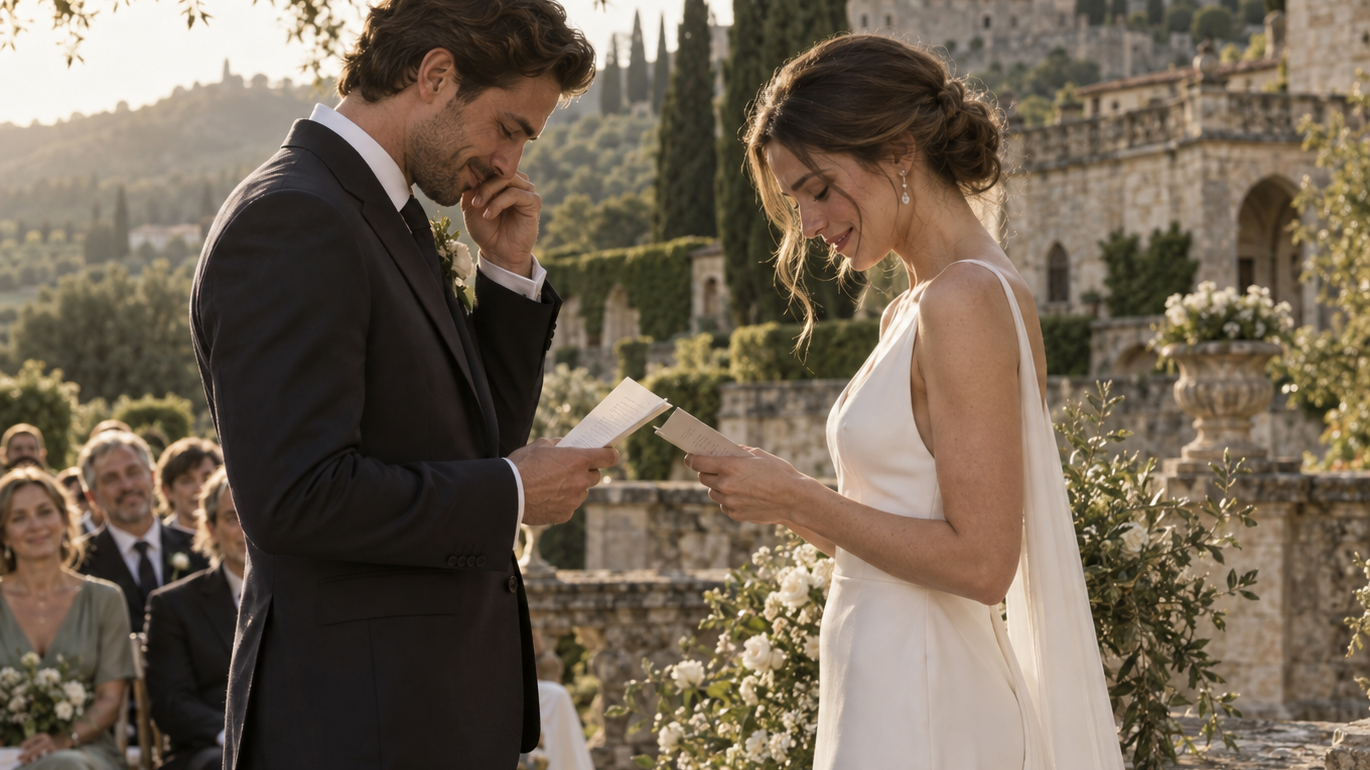
Symbolic ceremony vows should match the couple and the setting. In a historic castle, an estate garden, or a candlelit hall, the most elegant tone is usually warm, specific, and restrained.
That does not mean formal. It means edited. Humor is welcome when it reveals affection. Sentiment is welcome when it is grounded in a real moment. Poetic language is welcome when it sounds like you, not like a quote found the night before.
If the setting is grand, let the vows be human. Stone, candlelight, music, and architecture already provide scale. Your words can bring closeness.
A practical vow-writing exercise
Set a timer for 20 minutes and answer these prompts without editing. The first draft is not meant to be graceful. It is meant to collect truth.
- The moment I first felt safe with you was…
- I knew our life could work because…
- You have changed the way I see…
- In hard seasons, I promise to…
- In ordinary mornings, I promise to…
- When we are old, I hope we are still…
After writing, underline the lines that sound most like you. Build the vows from those lines only. Most strong vows are found by cutting, not adding.
How should you practice reading your vows?
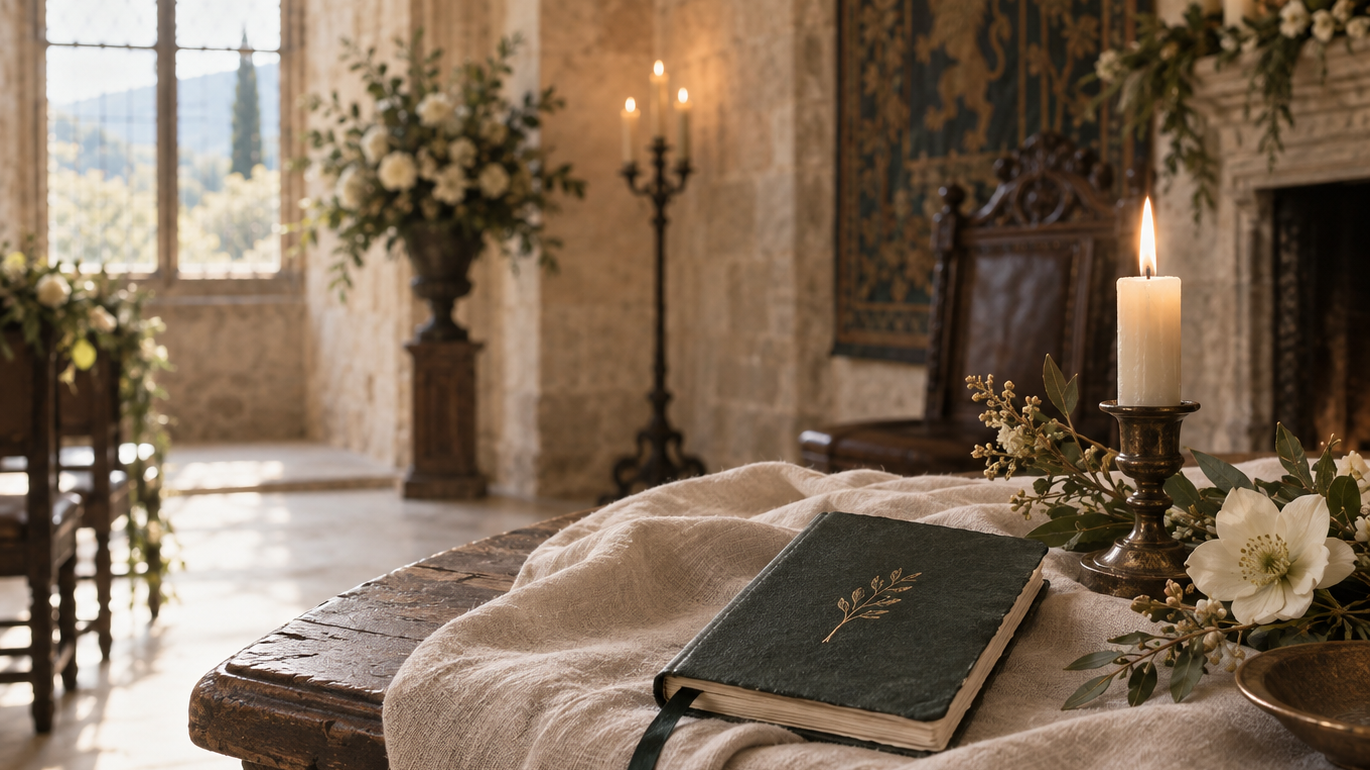
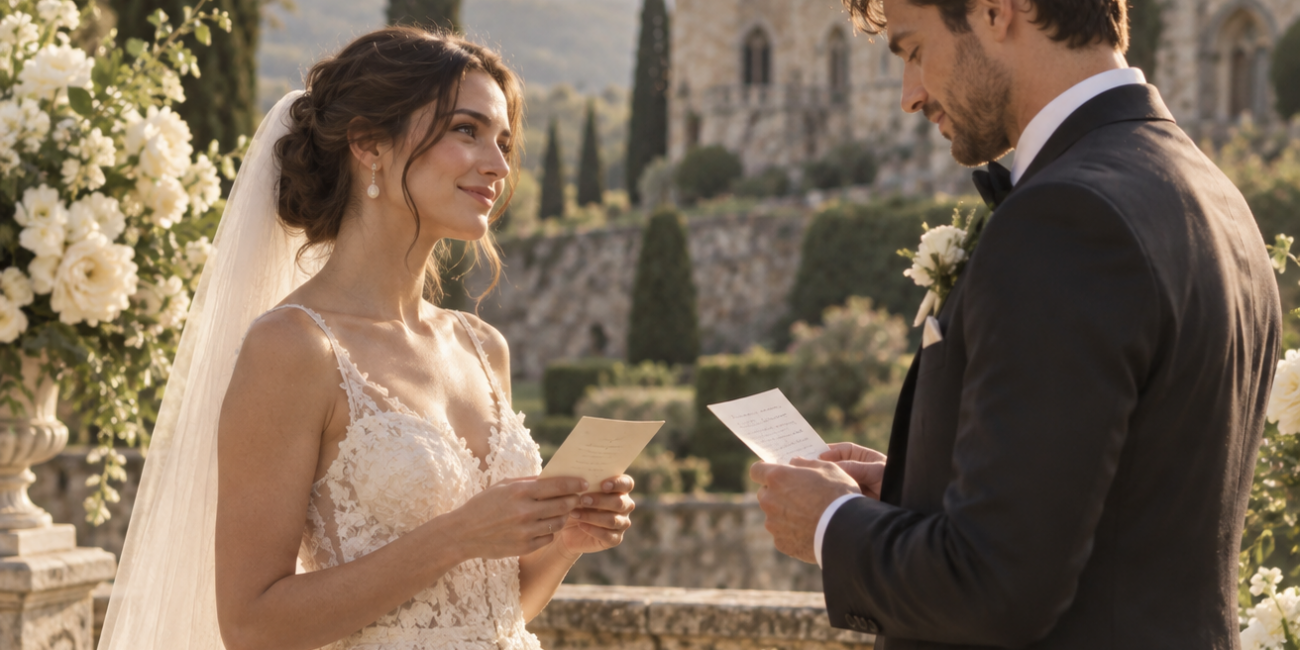
Practice your vows aloud at least three times before the ceremony. Reading aloud shows you where the sentences are too long, where emotion may catch, and where a pause would help the promise land.
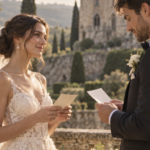
Print the final version or write it in a vow book. Phones can feel practical, but they rarely feel ceremonial. A small book or card also slows the hands, which helps the voice slow down.
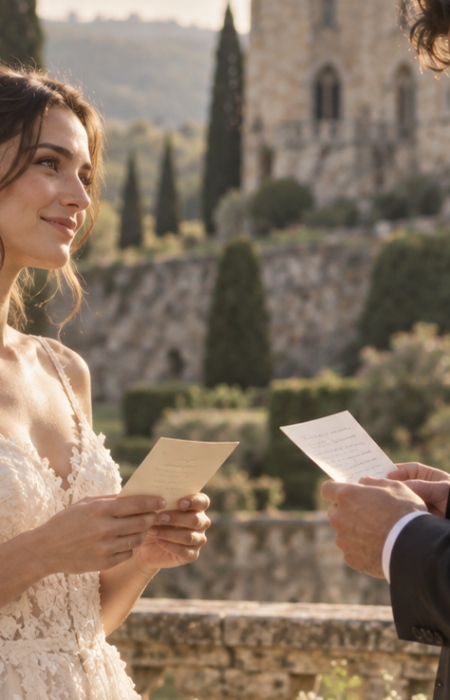
On the day, read one phrase at a time. Look up when you can. Let silence do part of the work. A vow is not a speech to conquer. It is a promise to offer.
What should you avoid when writing your own vows?
Avoid turning vows into a full relationship history, a comedy routine, or a list of compliments with no promises. The ceremony needs emotional clarity more than volume.
FAQ: Writing your own vows
Can we write vows if we are already having a legal ceremony elsewhere?
Yes. Many destination couples complete the legal formalities separately and use a symbolic ceremony for the emotional commitment. This can make the wedding day feel more personal because the ceremony is not limited by a fixed legal script.
Should both partners use the same vow length?
They do not need identical vows, but the length should feel balanced. Agree on a rough range before writing. If one partner writes 90 seconds and the other writes five minutes, the ceremony can feel uneven even when both texts are sincere.
Can someone help us write our vows?
Yes. A celebrant, planner, or ceremony writer can help shape your vows while keeping the words yours. The best support does not overwrite your voice. It helps you find structure, remove excess, and protect the emotional truth of the promise.
Should vows be serious or funny?
Vows can include humor when the humor comes from affection. The safest balance is warmth first, lightness second. A symbolic ceremony can beautifully embody playfulness, but the final feeling should still be commitment.
Let the words belong to the place
Writing your own vows is not about producing the most beautiful text. It is about saying the truest thing in the right moment, with enough care that your partner can receive it fully.
In a symbolic ceremony, the vows become part of a larger atmosphere: the architecture, the music, the walk, the guests, the light, the silence before the answer. When those pieces are guided with care, the ceremony feels less like a script and more like a private threshold.
If you are planning an intimate castle wedding in Europe and want the ceremony to feel personal without becoming overwhelming, Castle Weddings can help shape the place, rhythm, and words around what matters most. Request a private consultation and begin the conversation.

Try GUERLAIN Personalised Perfume for your Wedding Day You know that you can personalize perfume at your fingertips. You can design your personal fragrance, customize your bottle, or Read more
I know this article will be risky, but let me tell you: You can definitely do your own wedding makeup Read more
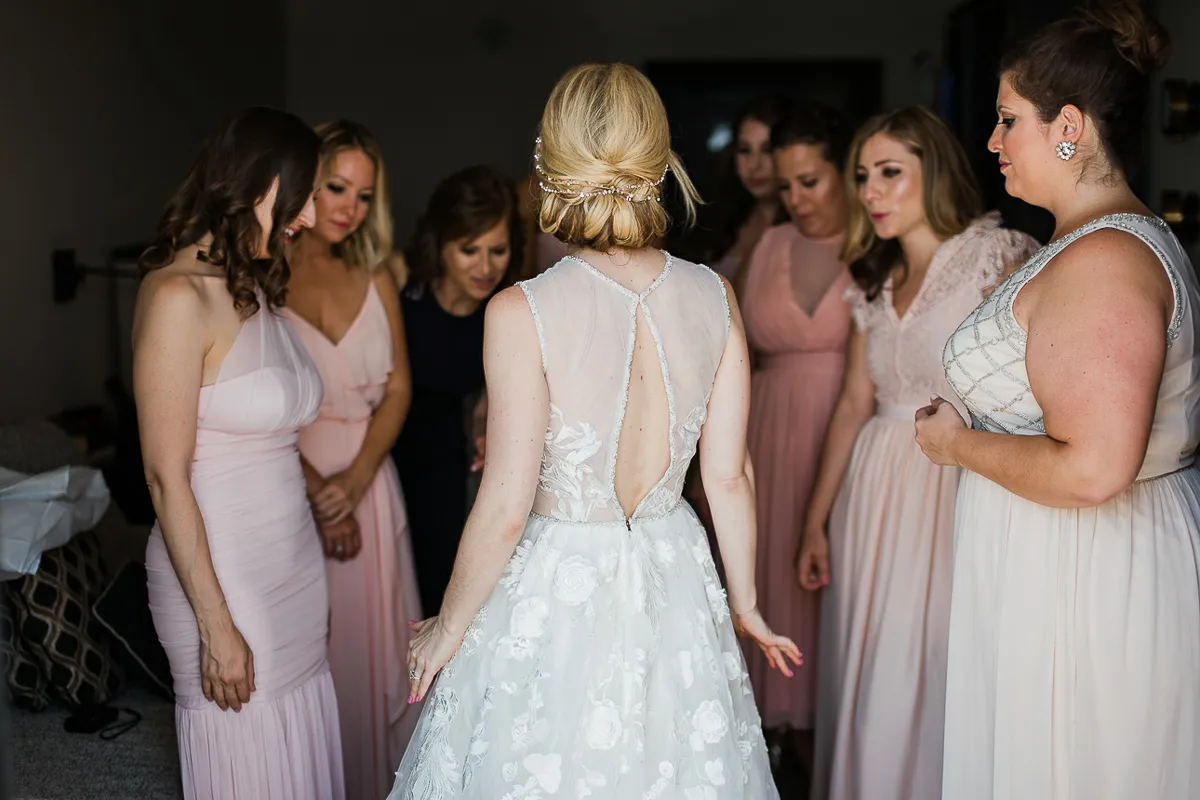
Why Wedding Coordination Is Essential (Even On A Budget) You’ve spent months planning every detail of your wedding—from the venue Read more

Medieval-inspired weddings are rising in popularity — not because couples want costumes, but because they crave atmosphere, symbolism, authenticity, and Read more

Other Articles
From Elopements to Big Weddings: Why Symbolic Works for Any Style
The Rise of Heritage Celebrations in Europe

2 Comments
Comments are closed.



[…] Writing Your Own Vows: A Symbolic Ceremony Guide […]
[…] Writing Your Own Vows: A Symbolic Ceremony Guide […]