Quiet bridal style is not plain. It is wedding style edited with confidence: fewer elements, better choices, and a look that feels like the bride rather than a mood board trying to include every trend at once.
For many brides, the hardest part is not finding beautiful ideas. It is knowing which ideas to leave out. A calm wedding look usually begins with subtraction.
Summary in Brief
- Start with a feeling, not a dress trend. Choose three words that describe how you want to feel before you shop.
- Let silhouette do more than decoration. Shape, fabric, and fit often feel more refined than extra detail.
- Choose one visual focus. If the dress has texture, keep accessories quiet. If the dress is simple, let one accessory speak.
- Think about the whole setting. A garden, city hall, castle, villa or chapel changes what looks natural.
- Do not confuse timeless with safe. A quiet look can still be personal, modern and memorable.
1. Name the feeling before you choose the dress
Before looking at dresses, name the feeling you want to carry. Not the theme. The feeling.
Words like effortless, architectural, romantic, restrained, vintage, modern, soft, cinematic, minimal, sculptural or old-world will give you more direction than a folder of saved images. Three words are enough. More than that usually means you are trying to hold too many versions of yourself at once.
If your three words are “soft, private, timeless”, a heavily beaded statement gown may fight the feeling. If they are “sculptural, modern, confident”, a lace dress with delicate sleeves may be beautiful but not yours.
2. Choose a silhouette language
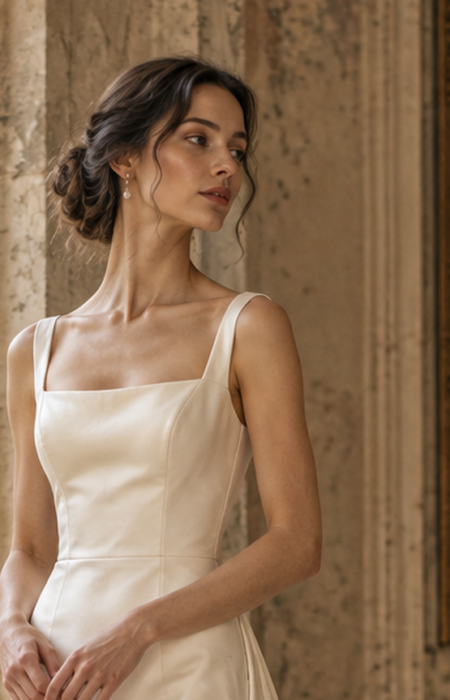
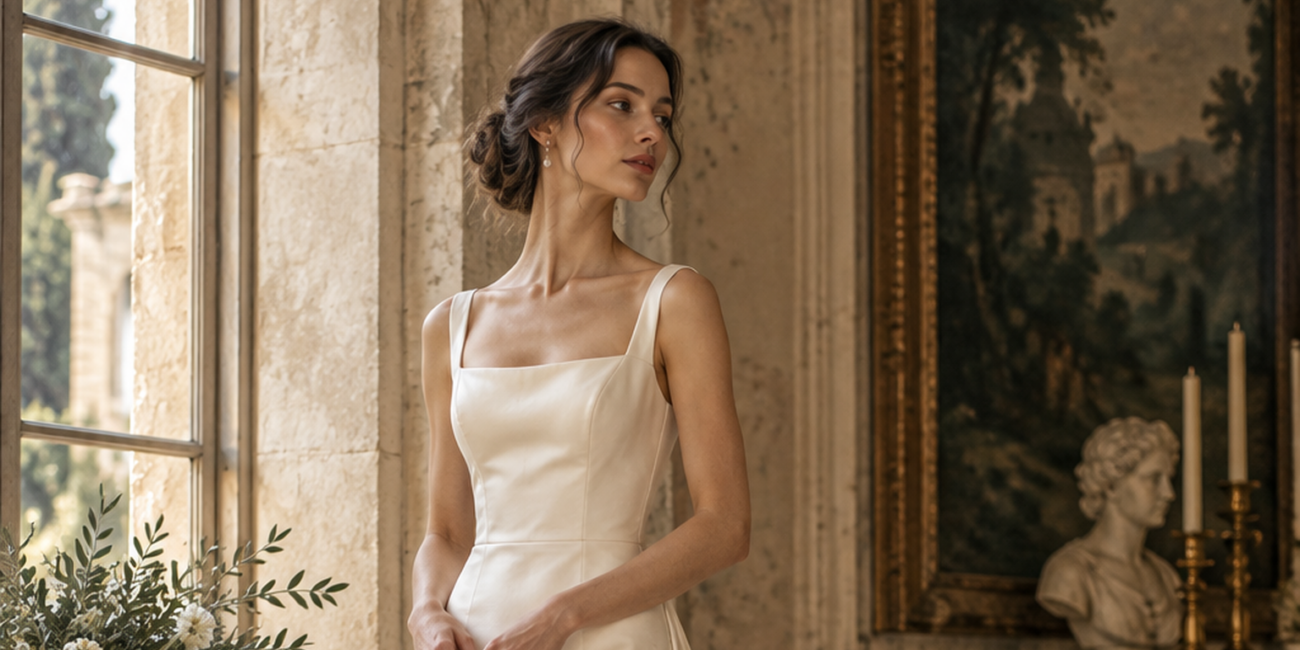
Quiet style often depends on silhouette. A clean column dress, a fluid bias cut, a structured basque waist, a soft A-line, or a tailored bridal suit can communicate more than decoration.
Think of silhouette as the first sentence your look says. It tells people whether the mood is romantic, architectural, relaxed, formal, feminine, editorial, or understated.
Try not to shop only by front-facing photos. Walk, sit, turn, lift your arms and imagine the ceremony, dinner and dancing. A dress that only works in a single still image may become tiring over the course of a long wedding day.
3. Let fabric carry the luxury
Quiet bridal style often looks expensive because the fabric is doing the work. Silk, crepe, mikado, organza, satin, fine lace, wool-silk tailoring, linen blends and beautifully weighted tulle all create different kinds of presence.
A plain dress in the right fabric can feel more refined than a complicated dress in the wrong one. Pay attention to how the fabric falls, how it catches light, and whether it looks alive in movement.
For outdoor or destination weddings, fabric matters even more. A heavy gown may look magnificent in a salon and feel impossible in heat. A very light fabric may move beautifully in a garden but need careful understructure for photographs.
4. Pick one visual focus
A quiet bride does not need to disappear. She needs one clear focus.
That focus might be a neckline, a veil, a pair of earrings, a bow, gloves, a dramatic train, a silk scarf, a sculptural bouquet, a red lip, or the cut of the dress itself. The point is to let one element lead.
When everything competes, nothing feels intentional. When one element leads, the rest can support it.
5. Style for the place, not only the camera
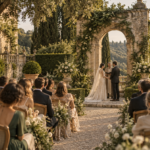
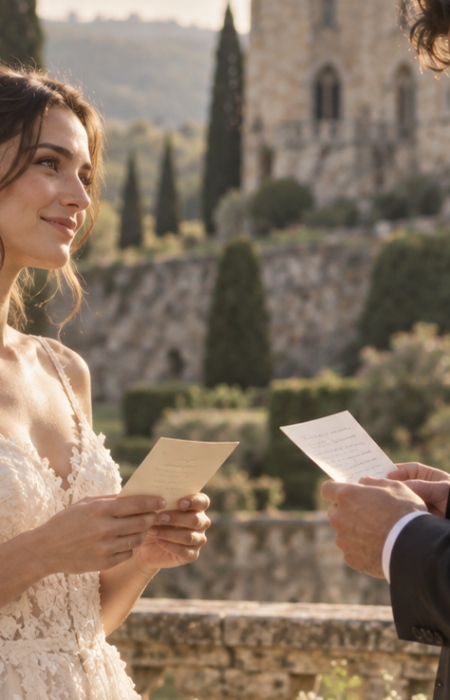
Your wedding setting will change how the look feels. A satin column dress in a city ceremony reads differently from the same dress in a candlelit castle hall. A lace gown in a garden can feel poetic; in a very ornate room, it may compete with the architecture.
Ask whether your look belongs to the place. Not literally, and not thematically. It should simply feel comfortable in the visual world around it.
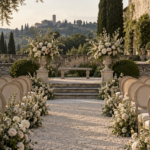
For historic venues, restraint often works beautifully. Stone, wood, candlelight and old gardens already carry texture. The bride does not need to out-decorate the setting.
6. Keep accessories in conversation with the dress
Accessories should feel like a conversation, not a second outfit. If the dress is quiet, accessories can add personality. If the dress is expressive, accessories should give it space.
Choose jewelry after the dress, not before. The neckline, fabric and hair plan will decide whether you need earrings, a necklace, both or neither. A veil should also earn its place. Sometimes it completes the look. Sometimes it adds volume where the dress already has enough.
Shoes matter, but mostly to you. If they will be visible, they can add a subtle note. If they will be hidden, comfort and proportion are more important than drama.
7. Decide what not to include
The most useful quiet-style question is: what can we remove without losing the feeling?
Remove one accessory. Simplify one hair idea. Reduce one decorative detail. Choose one material story instead of three. Quiet bridal style becomes clearer each time you let one unnecessary thing go.
This is not about being minimal for the sake of minimalism. It is about making space for the bride to be seen.
8. Make the beauty plan part of the styling
Hair and makeup can make a quiet dress feel complete or confused. A sleek bun, soft waves, natural skin, a precise lip, or a barely-there makeup look all say different things.
Do not treat beauty as a separate appointment. It is part of the look. If the dress is structured, softer hair may add ease. If the dress is very fluid, a cleaner hair shape may give the look definition.
A good beauty plan should look like you had enough time, enough sleep and very good taste. It should not look like a trend arrived before you did.
9. Leave room for a second look only if it has a purpose
A second look can be wonderful when the day genuinely changes: ceremony to dinner, formal dinner to party, garden to dance floor. It becomes unnecessary when it exists only because social media made outfit changes feel expected.
If you choose a second look, let it solve a real problem. Easier movement. A warmer evening layer. A shorter dress for dancing. A jacket that changes the mood without replacing the bride.
The first look should still feel complete. The second should feel like a chapter, not a correction.
FAQ
What is quiet bridal style?
Quiet bridal style is a refined wedding look built from restraint, fit, fabric and personal clarity. It avoids trend overload, but it does not have to be minimal or plain.
Can a quiet bride still wear lace?
Yes. Lace can feel quiet when the silhouette, accessories and beauty styling are restrained. The key is choosing lace as the main texture rather than adding too many competing details.
How do I avoid looking too simple?
Choose one strong focus: an excellent silhouette, beautiful fabric, a veil, a sculptural bouquet, earrings, gloves or a precise beauty look. Simple becomes memorable when one choice is intentional.
Should my wedding dress match the venue?
It does not need to match literally. It should feel natural in the setting. Think about light, architecture, season, temperature, terrain and the mood of the celebration.
Let the look become quieter until it sounds like you
The quiet bride is not trying to be invisible. She is trying to be unmistakable without being overstyled.
Start with the feeling. Choose the silhouette. Let fabric do more. Give one detail the lead. Then remove anything that makes the look feel less like you.
If you are also thinking about the ceremony itself, read the WMF guide to what guests actually remember from a wedding ceremony.

Try GUERLAIN Personalised Perfume for your Wedding Day You know that you can personalize perfume at your fingertips. You can design your personal fragrance, customize your bottle, or Read more
I know this article will be risky, but let me tell you: You can definitely do your own wedding makeup Read more

Writing your own vows for a symbolic ceremony? Use this calm guide to shape personal promises that feel intimate, clear, Read more
Why Wedding Coordination Is Essential (Even On A Budget) You’ve spent months planning every detail of your wedding—from the venue Read more

Other Articles
What Guests Remember From a Wedding Ceremony