
Guests rarely remember every flower, chair, or exact sentence from a wedding ceremony. They remember how the moment felt: whether they could hear the vows, understand why the place mattered, see the couple clearly, and feel included in the beginning of the marriage.
That is useful news for couples. A ceremony does not need to perform for guests. It needs to give them enough clarity, warmth, and rhythm to enter the moment with you.
Summary in Brief
- Guests remember emotion before decoration. The couple’s voice, reactions, and presence matter more than visual perfection.
- Clarity is part of beauty. If guests cannot hear or follow the ceremony, the feeling weakens.
- Small personal details stay with people. A reading, a family gesture, or a vow line often outlives larger production choices.
- The setting matters when it has a role. Guests remember a garden, chapel, courtyard, or hall when the ceremony feels connected to it.
- Good hosting makes the ceremony feel effortless. Guests should know where to look, when to stand, and why the moment matters.
1. Guests remember whether they could hear the promises
The most beautiful vow is lost if only the front row can hear it. Sound is one of the least romantic ceremony details to discuss, but it shapes the entire guest experience.
For outdoor weddings, old chapels, castle courtyards, and large halls, microphones should not be treated as a technical afterthought. Guests do not need theatrical volume. They need clear words, especially during vows, readings, and the celebrant’s introduction.
If the ceremony includes more than one language, clarity matters even more. A few carefully placed sentences can help guests understand where they are in the ceremony, even if they do not understand every word.
2. Guests remember the first emotional shift
Every ceremony has a moment when the atmosphere changes. It may be the processional, the first look between the couple, a parent walking slowly down the aisle, or the first line spoken by the celebrant.
This shift tells guests that ordinary conversation is over and something meaningful has begun. It does not need to be grand. In intimate weddings, the shift can be very quiet: a change in music, a pause before the vows, or the couple turning toward each other.
Plan the opening with care. Guests take their emotional cue from it.
3. Guests remember when the ceremony explains why everyone is there
Many guests know the couple only from one side. Some are friends of the bride, some are relatives of the groom, some have travelled across countries, and some may be meeting the other family for the first time.
A good ceremony helps them understand the relationship they are witnessing. That can be done through a short couple story, a few details about the place, or a welcome that acknowledges the effort guests made to be there.
The ceremony should not become a biography. It should give enough context for everyone in the room to feel, “I understand why this moment matters.”
4. Guests remember personal vows, but only when they are grounded
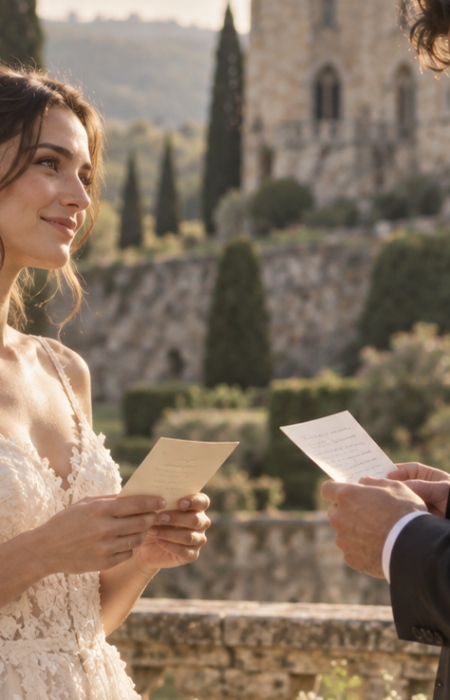
Personal vows often become the most memorable part of the ceremony because they allow guests to hear the couple’s own voice. The risk is making them too private, too long, or too full of inside references.
Good vows do not need to reveal everything. They usually do three things well: name what the person loves, acknowledge what life together asks of them, and make promises that sound specific enough to belong to that couple.
If the couple is nervous about speaking personal vows in public, a shorter version can work beautifully. One honest paragraph is stronger than five polished minutes that no longer sound natural.
5. Guests remember family moments that feel unforced
A ceremony becomes more layered when family is included with care. A reading by a sibling, a quiet blessing-style sentence from a parent, a candle ritual, a ring presentation, or a remembered family phrase can stay with guests for years.
The important word is care. Family involvement should not be added only because someone needs a role. It should support the emotional shape of the ceremony.
For intimate weddings, one family gesture can be enough. For larger destination weddings, family moments can help guests understand the roots behind the celebration.
6. Guests remember whether the ceremony belonged to the setting
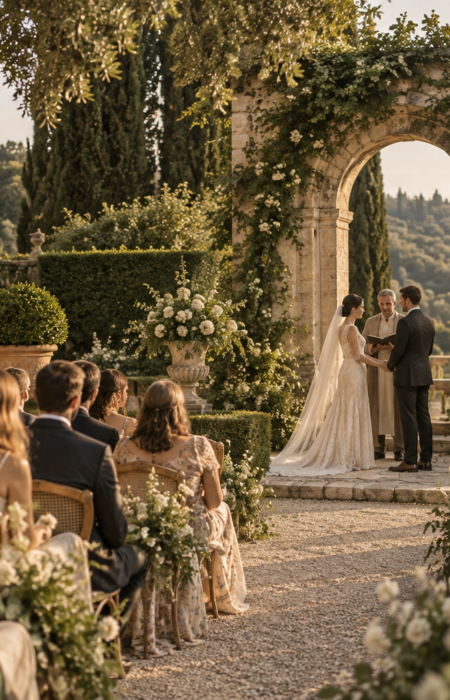
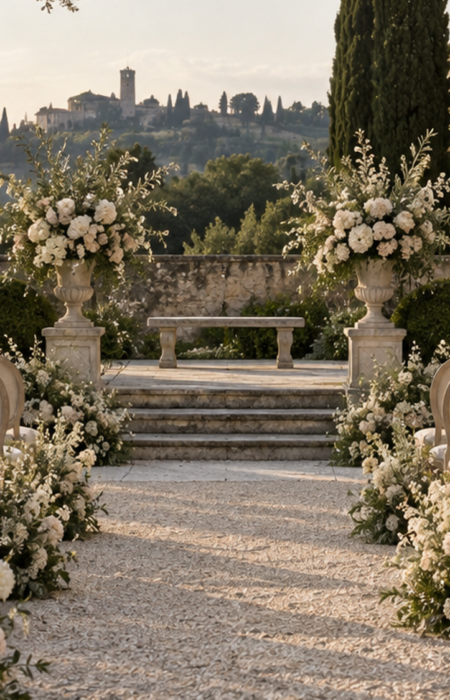
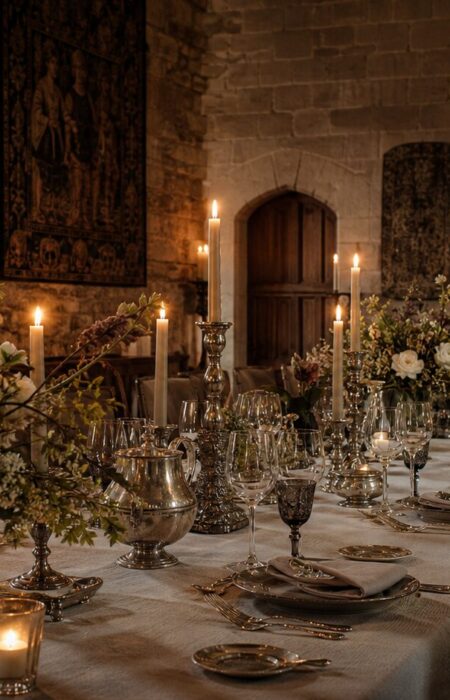
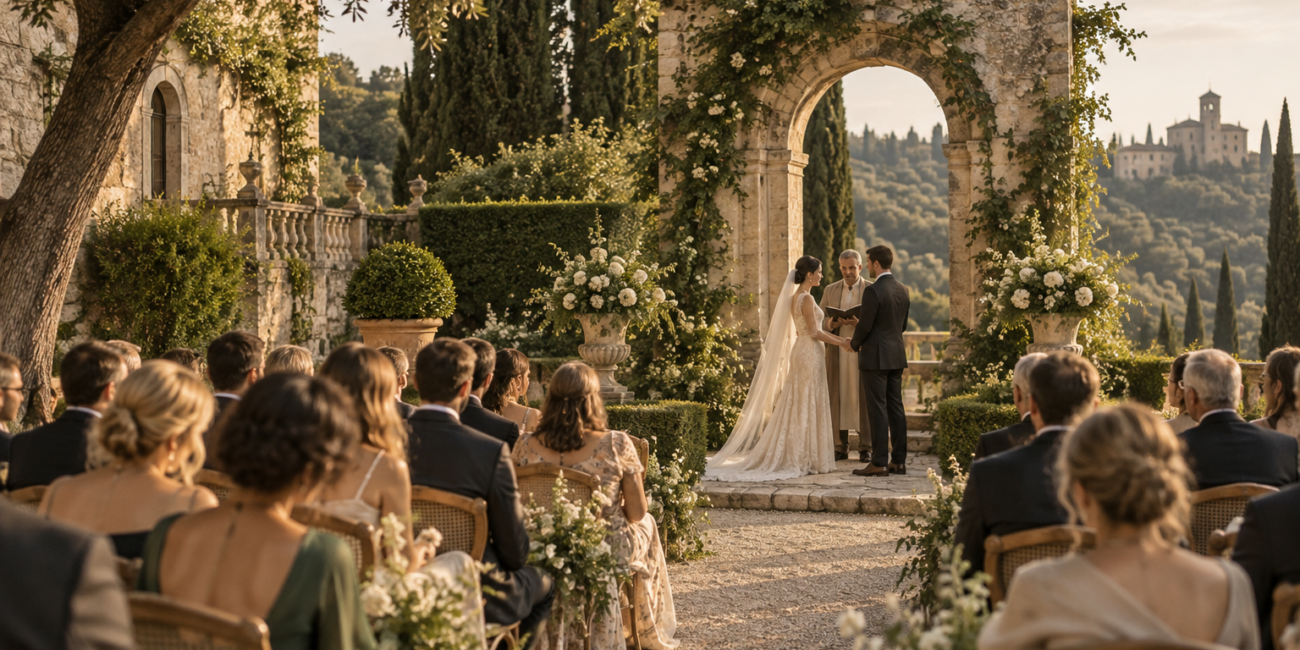
A destination wedding or historic venue gives the ceremony a natural frame. Guests remember the feeling of sitting in a garden before dinner, hearing vows in a chapel, or watching the couple stand in a courtyard surrounded by old stone.
The setting becomes memorable when the ceremony acknowledges it without overexplaining it. A single sentence can be enough: why this place was chosen, what it allows the couple to feel, or why gathering here matters.
The opposite is also true. If the ceremony ignores the place completely, the venue becomes a backdrop rather than part of the experience.
7. Guests remember the ending more than the middle
The closing of the ceremony carries guests into the rest of the day. A strong ending does not need dramatic language. It needs timing, music, and a clear emotional release.
Guests remember the kiss, the first steps back down the aisle, the music, the applause, and the moment everyone exhales. If the ending is hesitant or unclear, the energy drops. If it is well led, the celebration begins naturally.
Think of the ending as a handoff. The ceremony gives the marriage its beginning; the recessional gives the guests permission to celebrate.
What guests remember compared with what couples often overthink
How to plan a ceremony guests can actually feel
Begin with the guest experience, then return to the couple. Ask practical questions first: can guests hear, see, follow, and understand the ceremony? Then ask emotional questions: what should they know about us, what should they feel when the ceremony begins, and what should they carry into the rest of the day?
For most weddings, the answer is not more detail. It is better rhythm. Clear sound, a thoughtful opening, personal but grounded vows, one or two family moments, and an ending that releases the room will do more than adding layers guests cannot absorb.
FAQ
How long should a wedding ceremony be for guests?
Most guest-friendly ceremonies work well between 20 and 35 minutes. The right length depends on readings, languages, music, rituals, and venue logistics. A short ceremony can feel complete if it has clear structure.
Do guests care about ceremony decor?
Guests notice the overall atmosphere more than individual decor details. They may remember flowers, candles, chairs, or architecture if those elements support the feeling of the ceremony, but emotion and clarity usually last longer.
How can we make a ceremony feel personal without making guests uncomfortable?
Choose personal details that guests can understand. A short couple story, grounded vows, a family reading, or a meaningful piece of music usually feels intimate without becoming too private.
What is the biggest ceremony mistake for guest experience?
The biggest mistake is assuming beauty is enough. If guests cannot hear, follow, or understand the ceremony, the emotional impact weakens, even in a beautiful setting.
Plan for memory, not performance
A wedding ceremony is not remembered because every element was impressive. It is remembered because the room understood what was happening and felt invited into the beginning of the marriage.
Choose the details that help guests listen, feel, and follow. Let the rest stay quiet.
If you are preparing the words for your ceremony, read the WMF guide to writing your own vows.

Writing your own vows for a symbolic ceremony? Use this calm guide to shape personal promises that feel intimate, clear, Read more
Why Wedding Coordination Is Essential (Even On A Budget) You’ve spent months planning every detail of your wedding—from the venue Read more

Medieval-inspired weddings are rising in popularity — not because couples want costumes, but because they crave atmosphere, symbolism, authenticity, and Read more
Why choose Slovakia, Europe, for your destination wedding? This little Middle Europe country is a lovely idea. Have you ever Read more

From Elopements to Big Weddings: Why Symbolic Works for Any Style