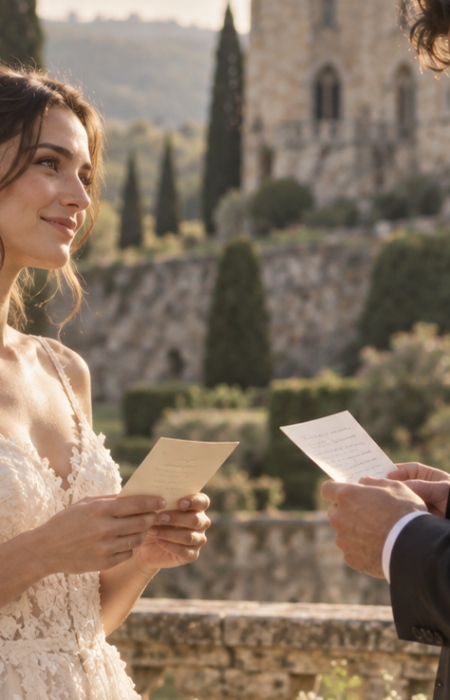


One of the most beautiful aspects of a symbolic wedding ceremony is its freedom — you can design it exactly as you wish. However, when it comes to who should officiate, couples often realize that this freedom comes with a surprising question: Who can actually perform the ceremony?
Professional Celebrant or Loved One?
In countries like the US or UK, it’s quite common for friends or family to officiate a symbolic wedding. In Europe, however, the situation is a bit different.
Here, there are no official licenses or designations for symbolic officiants — and not every friend or relative can easily take on the role. In many places, symbolic celebrants work independently, often as part of wedding agencies or experienced event professionals who specialize in personalized ceremonies.
So while you technically can ask a loved one to officiate, in practice it’s not always easy — and it deserves a deeper look (a topic we’ll explore in a future post).
The Pros and Cons
Professional Celebrant
✅ Pros:
- Experienced with public speaking and ceremony flow.
- Knows how to write a balanced script — emotional but not cliché.
- Keeps the ceremony running smoothly, even when nerves or weather intervene.
- Can adapt tone and language for an international audience.
❌ Cons:
- Less personal connection with the couple.
- Additional cost (though often worth it for the professionalism and peace of mind).
Friend or Family Officiant
✅ Pros:
- Deep emotional connection and personal stories.
- Adds warmth and authenticity that no professional can replicate.
❌ Cons:
- Requires confidence and preparation.
- Might struggle with timing, tone, or transitions.
- Can easily become too emotional — or too casual.
Styling the Role: Look and Feel Matter
An officiant sets the tone of the ceremony. Their style, outfit, and voice all play a role in the overall atmosphere.
Whether professional or personal, here are a few quick tips:
- Dress with harmony: The officiant’s outfit should blend with the wedding style — formal, bohemian, elegant, or rustic — without drawing attention away from the couple.
- Voice and presence: Calm, warm, and articulate delivery is essential. A microphone helps even in intimate settings.
- Script and structure: Encourage the officiant to include personal details, but avoid long anecdotes or inside jokes. Keep the focus on the couple’s story and emotions.
In Europe, It’s a Craft
While it may look effortless when done well, officiating a symbolic ceremony in Europe is truly an art of its own — requiring confidence, empathy, and experience.
The best officiants are often not official “professionals,” but people who understand both the emotional and cultural sides of the moment — and know how to make guests feel part of something meaningful.
We’ll explore how to become or choose the perfect symbolic celebrant in Europe in a later article.

Try GUERLAIN Personalised Perfume for your Wedding Day You know that you can personalize perfume at your fingertips. You can design your personal fragrance, customize your bottle, or Read more
I know this article will be risky, but let me tell you: You can definitely do your own wedding makeup Read more

Writing your own vows for a symbolic ceremony? Use this calm guide to shape personal promises that feel intimate, clear, Read more
Why Wedding Coordination Is Essential (Even On A Budget) You’ve spent months planning every detail of your wedding—from the venue Read more