

In the world of wedding design, some fashions shine briefly, and some that endure. The round table — so often championed as the social ideal — is one such fad that enjoys wide acclaim. Yet for those of us who make a life weaving celebrations into storied rooms and ancient gardens, one finds that the most gracious and memorable gatherings still hinge upon choices born of history, acoustics, and human habit.
Allow me, as Castle Weddings, to consider the virtues and limitations of the principal table types — and to offer practical counsel for creating evenings of conversation, warmth, and intimacy that truly honour the couple and their company.
Round Tables — The Promise and the Paradox
Round tables arrive with an attractive promise: equality of sightlines, the ability for a group to feel gathered about a single centre, and an appearance that photographs beautifully. For small groups of four to six, a round arrangement encourages eye contact and balanced conversation.
Yet the paradox arrives as guest lists grow. When a table extends beyond the intimacy of a small group, voices fragment and conversations splinter. For very large weddings, round tables can create acoustic clutter; guests at opposite sides must raise their voices, and the overall hum reduces the pleasure of speech for those with delicate hearing.
Round tables are splendid when you seek small clusters of conviviality and when the aesthetic calls for floral islands. But for grand feasts in vaulted halls or open gardens, they can sometimes betray their promise.
Long Tables — A Line of Story and Sight
Step into the great halls of Europe, and you will find the long table both customary and practical. Historically, banqueting tables permitted large households and visiting guests to dine together; they were designed for spectacle, community, and ease of service.
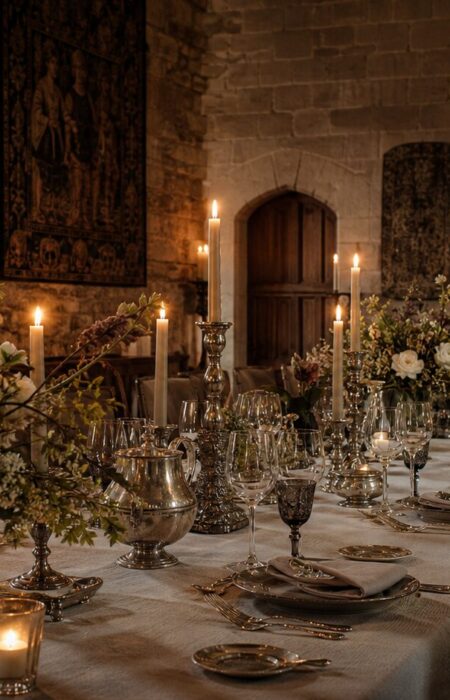
The long table wedding excels where inclusive sightlines and shared atmosphere matter. Conversation flows naturally along the line — neighbour to neighbour — creating a rhythm that feels intimate and humane. For couples who prize togetherness and the theatre of one continuous banquet set beneath garlands and candlelight, the long table is both practical and profoundly elegant.
From an aural perspective, the long table wedding often permits easier dialogue than a cluster of large rounds. Especially for intimate luxury weddings in historic castles, this arrangement feels timeless, cinematic, and deeply personal.

U-Shapes and Configurations — The Best of Both Worlds
A U-shaped or connected-banquet layout preserves the unity of a long table while creating a focal axis for speeches and head-table tradition. This format balances sightlines, encourages mingling, and makes serving seamless. For those wishing to combine ceremonial gravitas with conversational ease, the U-shaped long table is an elegant compromise.

Alfresco Dining — An Italian Phrase, A Continental Habit
“Al fresco” — literally “in the fresh air” — is a charming Italian phrase that has come to represent the timeless pleasure of dining outdoors. While outdoor meals are a tradition of ancient origin, the cultural association is distinctly Italian: terraces, villas, courtyards lined with olive trees, and endless Tuscan evenings.
In practice, alfresco dining brings more than romance. Outdoors, reverberation softens, making speech easier to understand. The ebb and flow of open-air banquets allows guests to converse, stroll, and mingle more naturally. This is why the alfresco wedding dining experience feels so effortless and memorable.
For couples dreaming of such an evening, we are delighted to introduce our new project — Italy Boutique Weddings — a collection of villas and historic venues crafted precisely for alfresco long table weddings under the stars.

How to Choose — A Practical Guide
- Guest List Size. Rounds are suitable for smaller groups, while long tables are ideal for shared banquets; U-shapes offer the most flexibility.
- Acoustics. For guests sensitive to sound, the long table wedding (especially outdoors) provides comfort and clarity.
- Service. Long tables streamline platters and wine service; rounds require more aisles and staff.
- Aesthetics. Rounds are perfect for centrepieces; long tables deliver cinematic drama.
- Hybrid. U-shapes blend elegance with practicality.
In Conclusion — Tradition as a Guide
There is no single “correct” table. Each format carries both beauty and limitation. Yet, as centuries of feasts in castles and villas attest, the long table wedding and the alfresco banquet are not simply nostalgic choices — they are enduring, human-centred designs for evenings of joy, conversation, and togetherness.
If your dream is a Tuscan night or a candlelit castle hall, let tradition be your compass: the table is not just furniture, but the stage upon which your celebration unfolds.
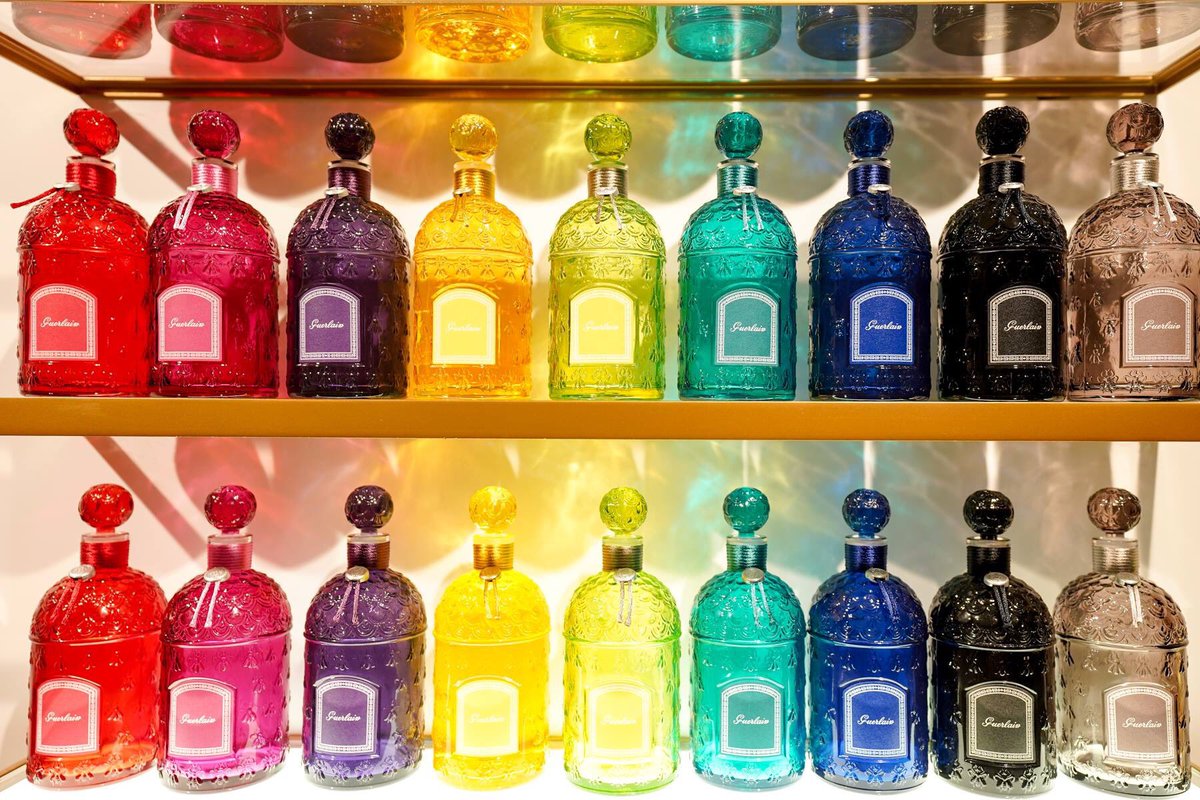
Try GUERLAIN Personalised Perfume for your Wedding Day You know that you can personalize perfume at your fingertips. You can design your personal fragrance, customize your bottle, or Read more
I know this article will be risky, but let me tell you: You can definitely do your own wedding makeup Read more

Writing your own vows for a symbolic ceremony? Use this calm guide to shape personal promises that feel intimate, clear, Read more
Why Wedding Coordination Is Essential (Even On A Budget) You’ve spent months planning every detail of your wedding—from the venue Read more

Other Articles

Rituals & Traditions to Include in Your Symbolic Ceremony